Why Most Mumbai Apartments Feel Smaller Than They Are – And How Good Interior Design Fixes It

If you are searching for practical solutions for compact urban homes, understanding how thoughtful Mumbai apartment interior design works can completely change the way your home feels. Many apartments in Mumbai suffer from poor space planning, inadequate lighting, cluttered layouts, and oversized furniture choices that reduce openness within the home.
At Lifeskapes, our approach to small apartment design Mumbai homeowners trust focuses on creating interiors that feel spacious, balanced, and highly functional without compromising elegance. Through intelligent layouts, layered lighting, and thoughtful material choices, even compact apartments can feel calm, open, and refined.
You bought a 2BHK. The floor plan said 950 square feet. But the moment the furniture went in, it started feeling like 600. Sound familiar?
This is one of the most common complaints we hear from Mumbai homeowners – and it almost never has anything to do with the actual size of the apartment. It has to do with how the space was put together. The furniture choices, the lighting, the colours, the way one room transitions into the next. These decisions either open a space up or quietly collapse it.
The good news is that most of these problems are fixable. Here is what is actually happening – and what changes the experience completely.
Poor Furniture Planning Makes Apartments Feel Smaller
The furniture is fighting the room
Mumbai apartments are not designed for furniture bought in Delhi showrooms or oversized sofas sourced from catalogues meant for larger homes. An L-shaped sofa that seats eight looks dramatic in a spacious flat. In a Worli 2BHK, it leaves barely enough room to walk to the balcony.
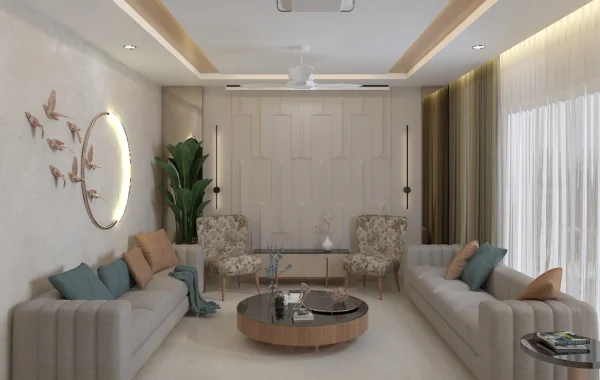
The fix is not minimalism. It is proportion. A low-profile sofa scaled to the room. A dining table that seats four comfortably instead of aspirationally seating six. A wall-mounted TV unit instead of a floor cabinet that eats into circulation space. When furniture fits the room, the room breathes.
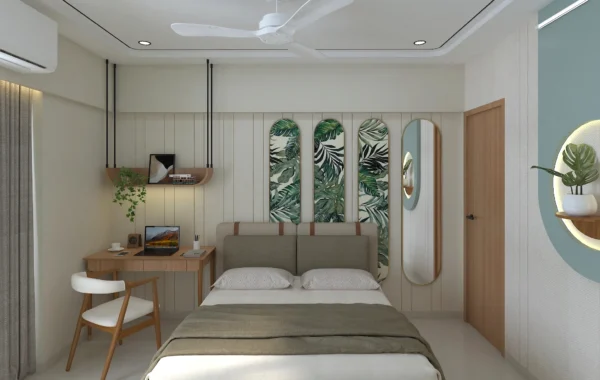
Multifunctional pieces help enormously – a window seat with storage underneath, an ottoman that doubles as a coffee table, a murphy bed in the second bedroom. Not because you are compromising, but because good design makes the space work harder.
This is one of the reasons homeowners increasingly work with experienced residential interior designers in Mumbai who understand how to optimize compact urban homes without compromising comfort.
Why Lighting Matters in Mumbai Apartment Interior Design
There is only one source of light – and it is overhead
Walk into most Mumbai apartments in the evening and you will find one ceiling light per room doing all the work. That flat, directionless light is one of the biggest reasons interiors feel flat and small. Light with no depth creates spaces with no depth.
Layering light changes everything. Cove lighting that washes the ceiling. Recessed spotlights that anchor different zones. A reading lamp beside the sofa. Under-cabinet lighting in the kitchen. Suddenly the room has dimension – it has far and near, bright and shadowed – and it reads as much larger than it is.
Add a well-placed mirror opposite a light source and you have essentially doubled the perceived size of the room. It sounds too simple to be true. It consistently works.
Thoughtful lighting strategy is often one of the defining elements used by luxury interior designers Mumbai homeowners trust for premium residential interiors.
Creating Visual Continuity in Small Apartment Design Mumbai
Every room feels like a separate box
This is about visual flow – or the lack of it. When the living room is tiled one way, the dining room another, the bedroom in a third colour scheme, the brain processes each space in isolation. The home feels like a series of small rooms rather than one connected whole.
Continuity is the fix. The same large-format tile or wide-plank flooring running through living, dining, and corridor without interruption. A consistent colour palette across rooms so the eye travels naturally from one to the next. Sightlines that are not broken by misplaced furniture or unnecessary partition walls. These are not glamorous interventions, but they are transformative ones.
At Lifeskapes, our approach as interior designers Mumbai homeowners work with focuses heavily on spatial continuity and movement flow within apartments.
Natural Light Plays a Bigger Role Than Most Homeowners Realise
The natural light is being blocked
Mumbai has genuinely good light for most of the year. Most apartments quietly waste it. Heavy blackout curtains that stay half-drawn. Furniture pushed directly against windows. Dark frames that make windows feel smaller than they are.
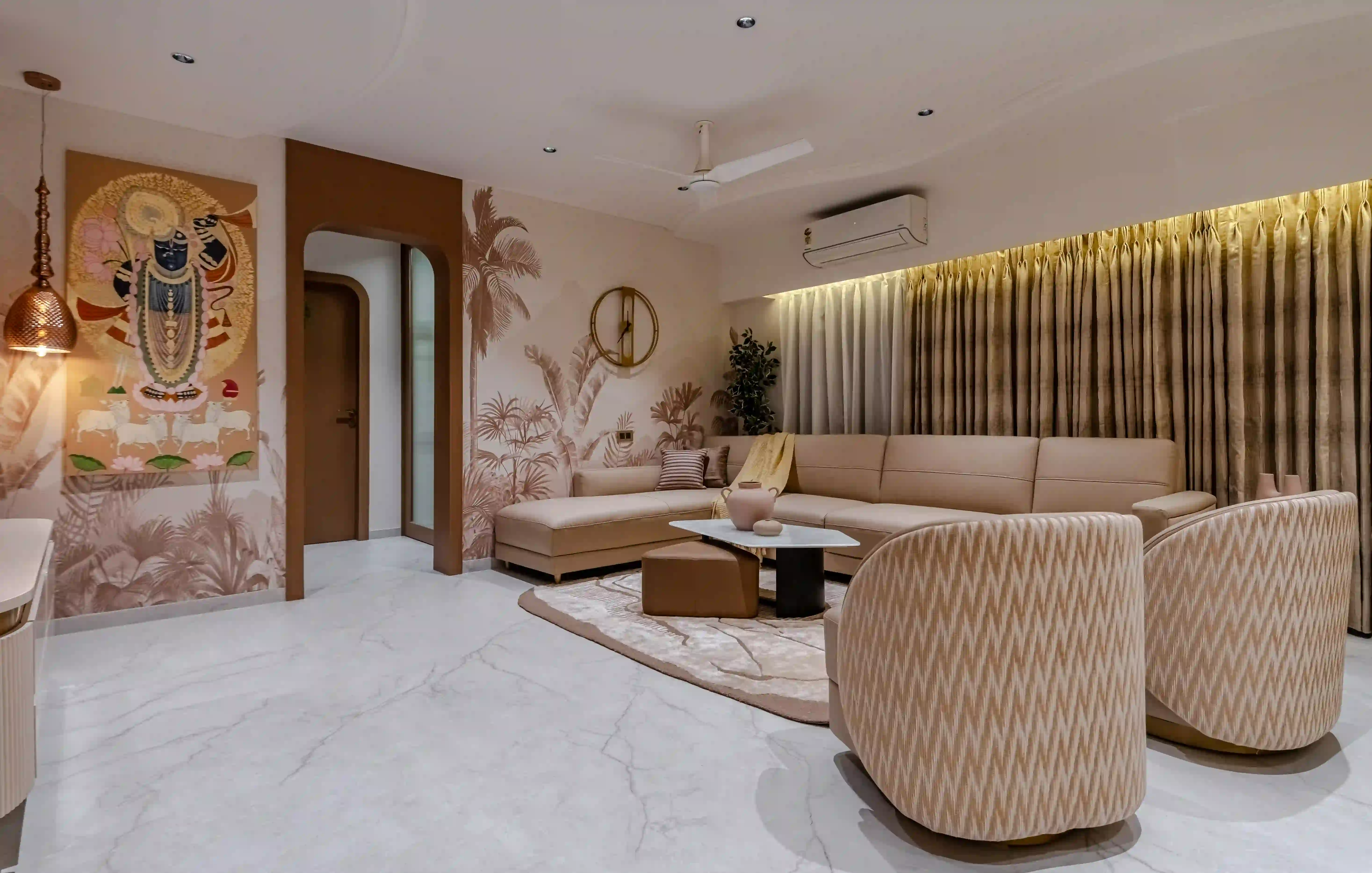
Sheer curtains that filter rather than block sunlight. Furniture pulled slightly away from windows. Light-toned flooring that reflects rather than absorbs. These choices let natural light travel further into the room and change the quality of the entire space. Even on a cloudy monsoon afternoon, a room designed around natural light will feel better than one designed against it.
Colour and Texture Can Completely Change Spatial Perception
The walls are too dark, or there is too much going on
Dark feature walls look incredible in design magazines. In a typical Mumbai apartment – say, 9-foot ceilings, windows on one side, no cross-ventilation – they create a room that feels like it is pressing in. The drama does not land the way it did in the photograph because the photograph was taken in a different kind of space.
This is not a case for painting everything white. It is a case for understanding how colour behaves in your specific apartment. Warm neutrals – taupe, ivory, blush, warm greige – tend to do beautiful things in Mumbai homes. If you want richness, bring it through texture and material: a limewash wall, a fluted panel, a brass detail. These add depth without weight.
Smart Storage Is the Foundation of Space-Saving Interior Design
Storage was never properly planned
This one underpins everything else. When a home does not have enough intelligent storage, objects end up on every surface, in corners, stacked on top of other things. Visual clutter is the single fastest way to make a space feel smaller and cheaper than it is.
Built-in storage, designed specifically for the apartment, solves this at the root. Wardrobes that go floor to ceiling with no gap at the top collecting clutter. Kitchen cabinets that reach the ceiling. A built-in entertainment unit that contains the TV, the devices, the books, and the general accumulation of daily life – all behind closed doors. When surfaces are clear, what the room actually looks like becomes visible. Usually, it is much better than you thought.
Customized storage planning remains one of the most valuable investments when working with experienced interior decorators Mumbai residents trust for modern apartment interiors.
Why Good Interior Design Matters More in Mumbai Apartments
In cities like Mumbai, where space comes at a premium, thoughtful planning becomes more important than square footage itself. The difference between a cramped apartment and a comfortable one often comes down to layout efficiency, lighting, storage integration, and visual balance.
This is why homeowners increasingly seek experienced interior designers in Mumbai capable of creating homes that feel larger, calmer, and more functional without structural expansion. Good design does not simply improve aesthetics – it changes how the space is experienced every day.
The apartment has good bones. They just need to be seen.
Most Mumbai apartments, even modest ones, have genuinely good structural qualities – a generous kitchen counter, a balcony with a view, a room with an interesting natural light pattern. The problem is that poor design decisions bury these features under layers of the wrong furniture, the wrong light, the wrong colour, and too much stuff.
Good interior design does not build a new apartment. It reveals the one that was already there.
At Lifeskapes by Sapna Jain, this is where we start – understanding the actual potential of your space, then designing around it deliberately. If your home has never quite felt the way you expected it to, we would be glad to show you why, and what is possible. Reach out to our studio for a conversation.