
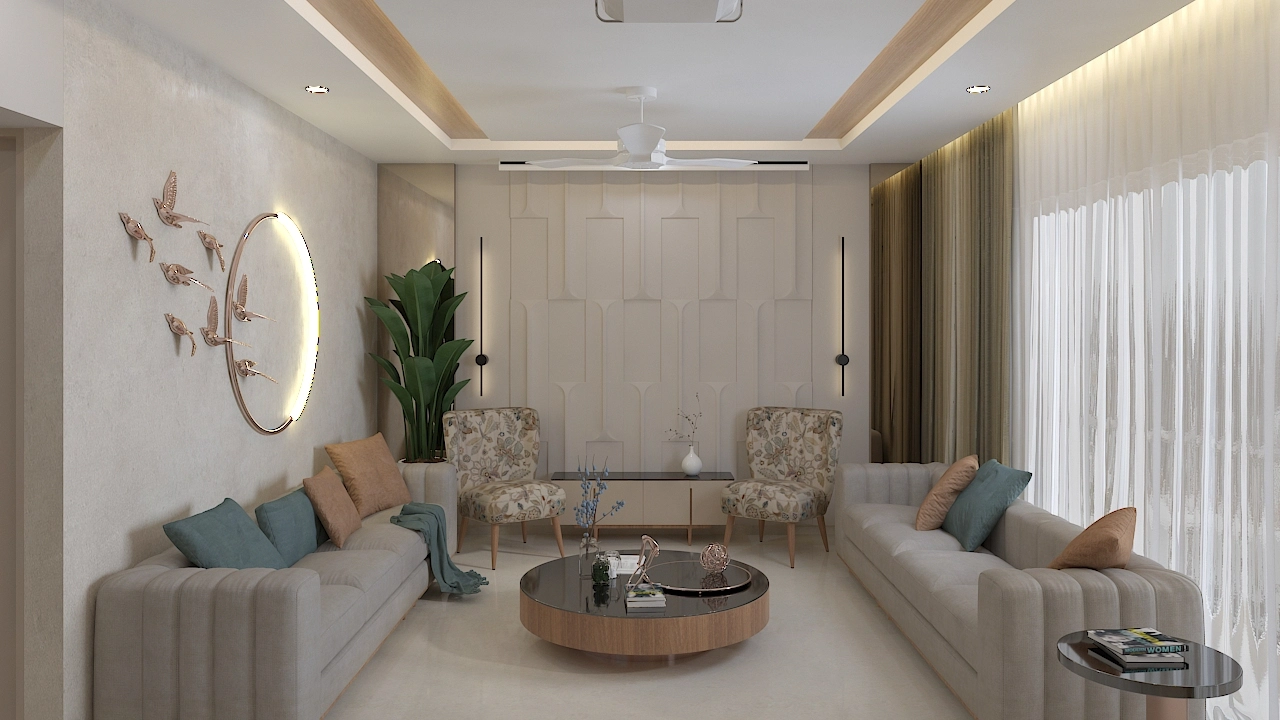

The quality of a workplace directly influences how teams perform, communicate, and collaborate. Today, businesses increasingly recognize that thoughtful office interior design Mumbai companies invest in can improve productivity, employee wellbeing, and workplace culture without increasing headcount or operational complexity.
At Lifeskapes, our approach to commercial interior design productivity focuses on creating work environments that support concentration, collaboration, and long-term business growth. Whether planning an office fit-out, renovation, or relocation, design decisions have a measurable impact on how people experience work every day.
Why Workplace Design Impacts Business Performance
There is still a version of office culture in India that equates seriousness with spareness. Bare desks, functional chairs, neutral walls, nothing that could be mistaken for comfort. The thinking, implicit or otherwise, is that people are here to work – not to feel good about where they are working.
The research disagrees, fairly decisively. The physical environment of a workplace shapes how people think, how long they can concentrate, how readily they talk to each other, and how they feel about the organisation they are part of. These are not soft metrics. They show up in output quality, in turnover rates, in the kind of work that gets produced.
This is not a case for expensive furniture and statement walls. It is a case for intentional design – for making deliberate choices about the environment you are asking people to spend most of their waking hours in.
Businesses increasingly work with experienced commercial interior designers in Mumbai to create workplaces that support both performance and employee wellbeing.
Why Lighting, Acoustics, and Ergonomics Matter
What the wrong office does to productivity
Start with lighting. The default in most Indian offices is cool-white fluorescent or LED strips overhead, and most people have simply accepted that this is what offices look like. It is worth knowing that this kind of lighting – bright, flat, slightly harsh – is physiologically taxing over long periods. It contributes to eye fatigue, headaches, and a slow erosion of the ability to concentrate. Studies on natural and warmer artificial light consistently show higher self-reported productivity and wellbeing from employees, and lower rates of absenteeism.
Then there is acoustics. Open-plan offices were widely adopted because they looked modern and reduced real estate costs per person. The trade-off was noise. Research from the University of Sydney identified noise as the single biggest driver of workplace dissatisfaction in open-plan environments. The specific tasks it damages most – reading, writing, complex reasoning, anything requiring sustained focus – are precisely the ones that produce the most value in knowledge-economy companies.
And then there is ergonomics, which sounds clinical but is really just about the chronic low-level discomfort that comes from sitting in a chair that does not fit, at a desk that is the wrong height, with a monitor too far away or too low. Discomfort is a distraction. It draws cognitive bandwidth away from work and toward managing a body that does not feel right. Ergonomic specification in office design is not a wellness perk. It is performance infrastructure.
What thoughtful design actually looks like in practice
Good office lighting design layers sources rather than relying on one overhead type. Warmer-toned task lighting at individual workstations. Adjustable ambient lighting that can shift across the day. Natural light is maximized through layout choices and window placement. These decisions are made during design, not added later.
Thoughtful lighting planning remains one of the defining characteristics of successful office interior designers in Mumbai projects.
Acoustic design in an open-plan office means sound-absorbing ceiling panels, soft floor finishes, acoustic wall treatments in high-activity zones, and – critically – enclosed spaces for focused individual work. Phone booths, single-person pods, library-style quiet zones. Not to replace collaboration, but to give people somewhere to go when the work they are doing needs silence. Offices that provide this variety see better output on concentration-heavy tasks meaningfully.
Biophilic design – the integration of natural elements like plants, natural materials, wood and stone surfaces, and views of greenery – has consistent research support for reducing stress and improving mood and focus. In Mumbai offices where space is tight, even modest interventions work: a living wall panel, planter dividers between work areas, and maximizing whatever view the windows offer. These are not decorative choices. They change how the brain functions in the space.
Many modern commercial interior designers Mumbai businesses trust now incorporate natural materials and greenery as part of workplace wellbeing strategies.
How Commercial Interior Design Supports Team Collaboration
How design shapes collaboration
Harvard Business School research found that face-to-face interaction is 34 times more effective than digital communication for building relationships and generating collaborative ideas. The design implications are significant: where people sit relative to each other, where the natural gathering points are in an office, how easy it is to have an unplanned conversation – these shape how much real collaboration actually happens.
Most Indian offices are under-provisioned with meeting space, and what exists tends to be too formal for how work actually gets done. A boardroom and two conference rooms serves the scheduled meeting well. It does not serve the two-person conversation that needs to happen quickly, without booking software and a fifteen-minute wait for a room.
Small enclosed pods for two or three people are one of the most useful and under-used elements in office design. They change the texture of daily work life significantly – people talk more directly, decisions get made faster, and the social fabric of a team gets stronger because informal conversation has somewhere to happen privately.
These planning decisions often emerge from early workplace strategy sessions led by experienced interior design company Mumbai professionals.
Informal breakout spaces – a well-designed pantry, a lounge area near the coffee machine, a high-top counter where people can stand and talk – are where a lot of a company’s actual culture is built. These spaces matter. The organisations that invest in them tend to have teams that like each other more and collaborate more readily.
As workplace expectations evolve, office design collaboration increasingly depends on providing employees with a variety of environments rather than a single work setting.
The Business Value of Workplace Experience
The signal that design sends
There is a dimension to office design that sits outside productivity metrics but matters just as much: what the space communicates to the people who work in it. A company that invests in a thoughtful, well-designed workplace is signalling that the people who come to work there are valued. That quality matters. That the experience of being here is worth caring about.
In a competitive talent market – and Mumbai’s talent market is competitive – this signal is part of the employer brand. Design-forward offices attract design-forward people. They reduce attrition among the kind of employees who have choices. And they make the first impression on every client, every candidate, and every visitor who walks through the door.
Why Office Renovation Is No Longer Just About Aesthetics
Many businesses still approach office upgrades primarily as visual improvements. In reality, successful office renovation Mumbai projects improve how teams function, communicate, and interact throughout the workday.
The most effective workplaces support different working styles simultaneously. Focused work, collaborative discussions, informal interactions, and client meetings all require different environments. This is why businesses increasingly invest in workplace design India solutions that prioritize flexibility, comfort, and long-term usability alongside aesthetics.
A well-designed office is not simply a place where people work. It becomes an environment that actively supports better work.
Explore related services and insights:
- Commercial Interior Designers in Mumbai
- Luxury Interior Designers Mumbai
- Residential Interior Designers in Mumbai
- Office interior designers in Mumbai
- Projects by commercial interior designers mumbai
At Lifeskapes by Sapna Jain, we design commercial spaces with the same care and intention we bring to residential work. If you are planning an office fit-out, renovation, or relocation in Mumbai, we would be glad to be part of the thinking from the beginning.